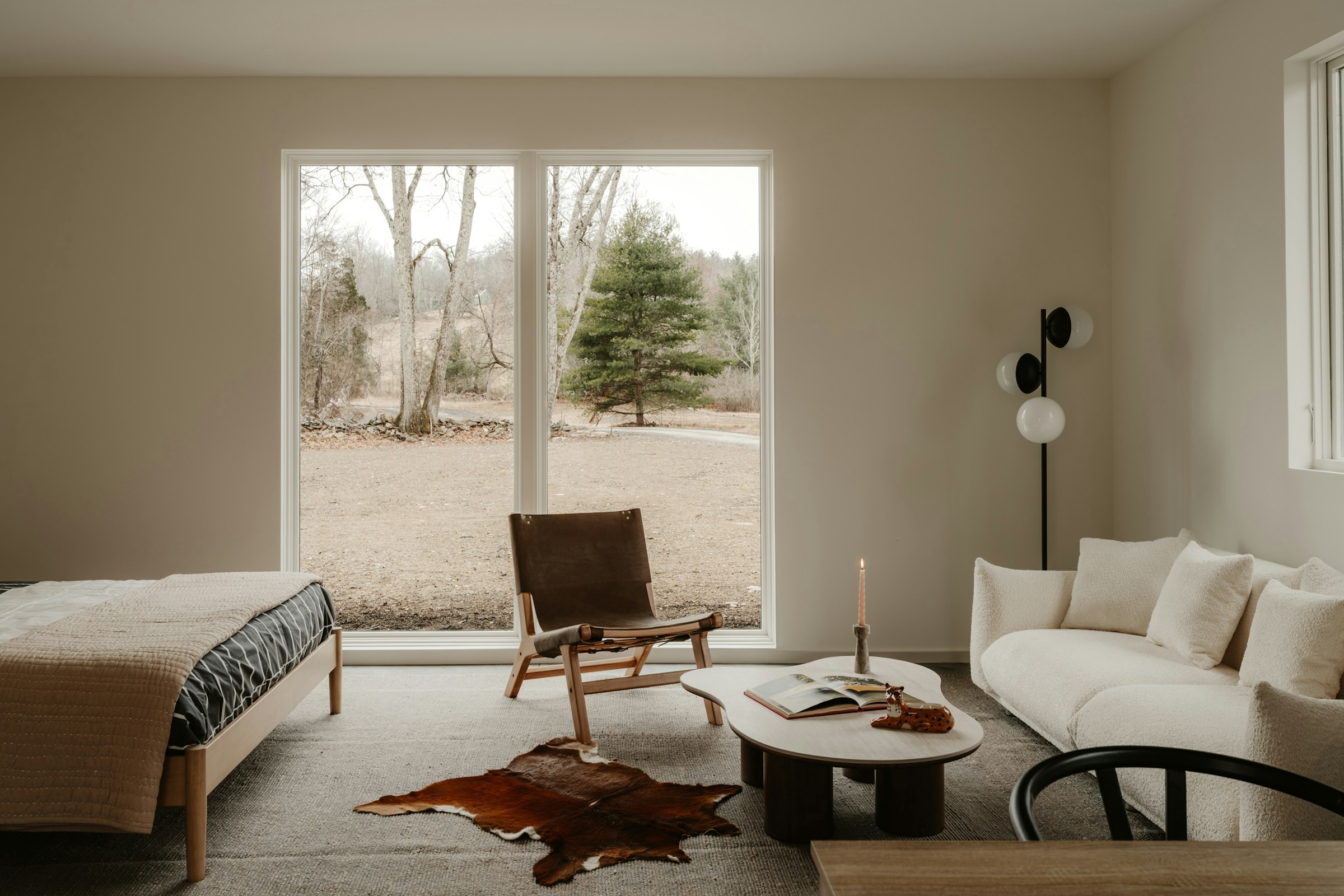
Professional staging is often described as a way to make a property look beautiful. That is part of it, but I think its more important role is helping buyers understand the home.
The best staging does not dominate a room. It provides enough information for a buyer to understand scale, function, and possibility.
Empty Rooms Can Be Surprisingly Difficult to Read
A vacant room often photographs larger than it feels in person, but buyers can have difficulty understanding its actual dimensions.
Will a king bed fit?
Can the living room accommodate a sectional?
Is there enough space for a dining table?
Furniture provides reference points.
In a well-staged property, buyers do not have to mentally calculate whether the room works. They can see it.
Too Much Furniture Can Be Just as Problematic
Staging is not simply filling every space.
Oversized furniture can make an otherwise generous room appear cramped. Too many pieces can interrupt sightlines and make the layout harder to understand.
This is particularly important in condos where every square foot needs to feel intentional.
Sometimes the most effective staging decision is removing something rather than adding it.
Flexible Rooms Need a Purpose
Dens, bonus rooms, and unconventional spaces can be difficult for buyers to interpret.
A seller may understand perfectly how a room could function as an office or guest space because they have lived there for years.
A buyer seeing the property for fifteen minutes may not.
Thoughtful staging gives those spaces an identity without making them feel locked into a single use.
Staging and Photography Work Together
Most buyers see the home online before they ever see it in person.
That makes staging part of the photography strategy.
Furniture placement can direct attention toward a view, improve the visual balance of a room, and make photographs easier to understand.
For a view condominium, for example, I want the interior and the outlook to complement one another. The furniture should never compete with one of the home's strongest assets.
The Style Should Match the Property
A historic home, modern high-rise condo, and mid-century house should not necessarily be staged the same way.
The presentation should support the architecture.
I want buyers to feel that the furniture belongs in the home rather than feeling as though a generic staging package was dropped into every room.
That does not mean the design needs to be highly personalized. In fact, it usually should not be.
The objective is sophistication without distraction.
A Recent Example: Insignia 813S
At Insignia 813S in Belltown, the preparation was deliberately modest: staging, fresh paint, new carpet and a new cabinet front. The goal was not to transform the residence. It was to make its real differentiators obvious: one of the larger South Tower plans, a pantry, custom built-ins, two EV-ready parking stalls and a park-facing outlook.
In a large building, buyers compare units side by side. Staging helped the larger plan read as larger and gave the flexible space a clear purpose in the photographs, so the home did not look like one more resale in the tower.
The home listed on August 4, 2026 at $1,225,000, went pending on August 29 and closed on September 11 at $1,275,000. I would not credit staging with that result on its own. The early written offers came in well below the asking price, and what closed the gap was weeks of persistent follow-up with agents who had already shown the home, and a negotiation with more than one interested party. Preparation put the home in a position to hold its value; the follow-up and negotiation did the rest.
A Short Pre-Photography Sequence
Before the photographer arrives, I work through the same five steps. First, identify the two or three features a buyer should notice in the first photographs. Second, stage enough to show room scale and to give any flexible space an obvious use. Third, remove anything that blocks a sightline to a window, a view or the next room. Fourth, finish the small repairs a camera will exaggerate: a chipped cabinet, a scuffed wall, a burned-out bulb. Fifth, review a few test frames and adjust furniture before the full shoot.
Deciding How Much Staging a Home Needs
There are three broad approaches, and the right one depends on the home rather than a package. A vacant home usually benefits most from full staging, because empty rooms are the hardest to read. An occupied home often needs editing more than furniture: removing pieces, clearing surfaces and rearranging what is already there. Select-room staging sits in between, focusing on the rooms buyers use to judge the home, typically the main living area, the primary bedroom and any flexible space. I ask a stager to quote the specific approach for the specific home, and compare that quote with what the home is missing, rather than starting from a budget. My property preparation guide covers the rest of the pre-listing work.
Staging Is Ultimately About Clarity
Buyers are making a large financial decision, often while seeing several homes in the same day.
Anything that makes a property easier to understand helps.
Good staging creates clarity around room size, function, flow, and lifestyle.
That emotional connection matters, but it begins with something very practical: helping a buyer understand how the home could work for them.
Work With Luke
Have Questions About the Seattle Market?
Luke tracks Seattle market data closely and can put the numbers in context for your specific situation, whether you're buying, selling, or evaluating a property.
